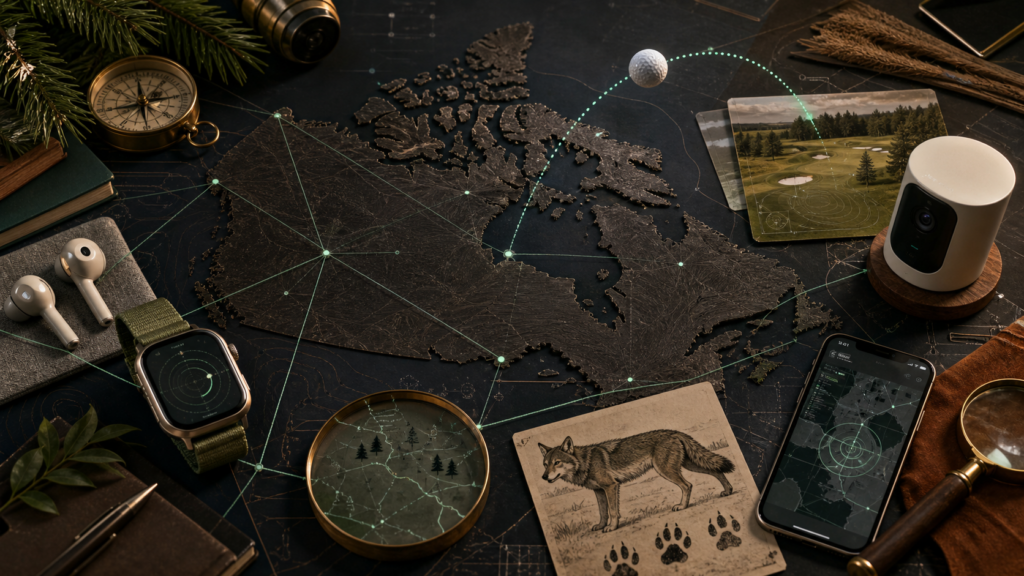
Golf has spent two decades turning every shot into data. In 2026, the data began talking back from ordinary-looking glasses. Integrations with 18Birdies and Arccos promised course information, wind, performance trends and club suggestions without pulling out a phone.
The fantasy is a green line floating through the air. The actual product is more restrained and perhaps more useful: ask a question, hear a yardage, keep your eyes on the course.
That voice-first design connects several existing systems. GPS knows location. Course databases know hazards. Club sensors or apps know history. The glasses become the microphone, speaker and camera at the top of the stack.
What actually changed
Meta expanded its AI-glasses line in the U.S. and Canada and third-party golf integrations began connecting the eyewear to established shot and course platforms. A golfer could request information while playing instead of operating a watch or phone.
The advance was not a new golf sensor. It was orchestration: making existing data conversational at the moment a player chooses a club.
How it works, without the launch-event fog
The glasses capture a voice request and pass it through the connected phone and services. GPS and course maps locate the shot; account history adds club or performance context; an AI system turns the inputs into a spoken response.
Accuracy is chained. Wrong GPS, stale wind, a missed shot or an incorrect club history can produce polished bad advice. The system should reveal which data informed the answer.
The Canadian reality check
The integration was reported as rolling out in Canada and the U.S., but subscription and product availability could differ. Golfers needed to price the eyewear, prescription lenses if required, the golf app and any club-sensor system as one stack.
Canadian courses also supply the perfect test range: heavy tree cover, elevation, weak cellular pockets, rain and shoulder-season cold. A voice caddie must remain useful when the network is not.
Who should care—and who can wait
Existing Arccos or 18Birdies users who already want camera glasses have the most coherent case. The integration reduces friction in a system they understand.
A golfer buying glasses solely for a better score should first try a watch or phone app. The least expensive stroke is usually still a lesson.
What the announcement does not settle
Voice on a quiet fairway is different from voice in wind, carts and conversation. Reviewers should test recognition, response time, battery and whether the feature becomes socially annoying by the back nine.
Camera-equipped glasses also affect bystanders. A visible recording indicator, respectful use and clear club rules are part of the product experience, not a footnote.
The OneZero verdict
Golf is an unusually good home for ambient computing because the player’s hands and attention are occupied. A spoken answer can be more elegant than another screen.
The winning version will know when to answer and when to stay quiet. Golf already supplies enough unsolicited advice.