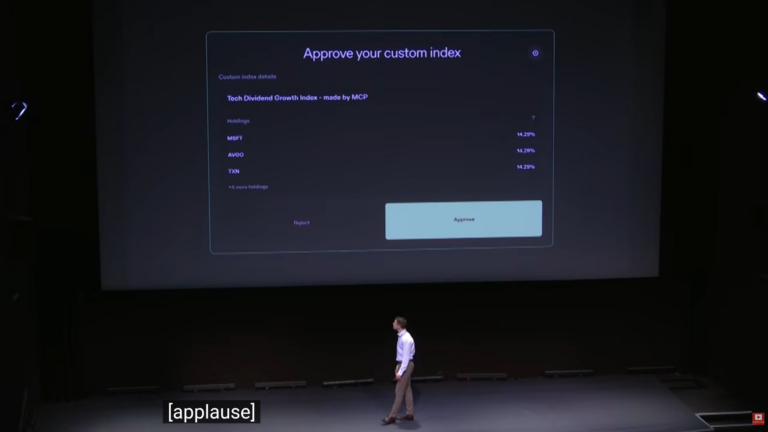
For most of the web’s history, a business tried to win a click. A customer searched, saw a result or advertisement, visited the website, compared the offer, and acted. That sequence is changing. Search and conversational systems are beginning to help people compare products, ask follow-up questions, narrow options, and—in selected markets and categories—complete more of the transaction inside the assistant.
The short answer
Agentic commerce is a broad term for software that can take steps in a shopping task on a person’s behalf. The useful version is not a robot with an unlimited credit card. It is an assistive layer that can understand a request, find eligible options, compare structured facts, apply the customer’s instructions, and ask for approval at important moments.
In 2026, parts of this are real and shipping. Google has announced Universal Commerce Protocol-powered shopping features across Search, Gemini, and Maps, including selected U.S. checkout experiences. Stripe is openly preparing payment infrastructure and merchant systems for agent-assisted discovery and transaction flows. The exact availability varies by country, retailer, platform, and product category. The direction is clearer than the timetable.
“Find a durable option under this budget that can arrive before Friday.”
→
The assistant identifies businesses and products it can understand.
→
Price, fit, proof, availability, policies, and context are weighed.
→
The person confirms the choice, identity, payment, booking, or handoff.
→
The business still has to deliver a trustworthy real-world experience.
What changed in 2026
Google’s 2026 commerce announcements describe a more conversational shopping experience and a common protocol that can connect consumer surfaces, businesses, and payment providers. In selected rollouts, people can move from research toward checkout without reconstructing the cart on a separate site. Google also describes richer product data and business agents intended to answer questions in a brand’s voice.
Stripe’s 2026 Sessions program frames agentic commerce as a new sales channel with consequences for product discovery, catalogues, identity, authorization, trust, returns, refunds, and payment risk. That is an important shift in emphasis. The challenge is not only whether an assistant can recommend an item. It is whether the entire promise remains accurate and reversible when software participates in the journey.
The website is not disappearing
The role of the website is becoming broader. It remains a destination for people, a source of proof, a service surface, a transaction layer, and an owned record of what the business says. It may also become a source that assistants use to understand the offer.
That makes clarity more valuable, not less. A beautifully vague website is difficult for both a person and a machine to interpret. A useful site names the product or service, intended customer, geography, availability, price logic, policies, proof, constraints, and next step. It keeps those facts consistent with business profiles, product feeds, directories, and service systems.
Product businesses and service businesses will feel this differently
Structured facts become part of discovery.
Availability, variants, materials, dimensions, compatibility, price, delivery, returns, reviews, and merchant identity can be compared before the visit.
Risk: an outdated or incomplete catalogue makes the product invisible or misrepresented.
Fit and trust remain harder to compress.
Location, scope, timing, credentials, process, proof, starting investment, exclusions, and response expectations help an assistant decide whether to recommend or route an inquiry.
Risk: generic service language creates poor-fit leads or no confident recommendation.
Prepare the facts before the protocol
Most established businesses do not need to implement a new commerce protocol this week. They do need to clean up the information that any channel depends on.
- Define the offer in customer language.Name what it is, who it is for, the problem it solves, and the situations where it is not a fit.
- Make price logic visible.Use exact prices, ranges, minimums, packages, or a clear explanation of what changes the price.
- Publish constraints.Geography, availability, lead time, eligibility, compatibility, exclusions, and capacity prevent confident but wrong recommendations.
- Strengthen proof.Recent reviews, specific project evidence, credentials, policies, and accountable ownership help a customer verify the recommendation.
- Align public records.Website, business profile, catalogue, directory, social bio, and booking system should agree on the basics.
- Protect the handoff.Confirm what an assistant may do, what the person must approve, and how errors, cancellations, returns, or rescheduling work.
- Keep the human route usable.A customer should still be able to contact the business, understand the decision, and recover when automation fails.
Trust will move into the transaction design
When software participates in discovery and checkout, trust cannot be a logo beside the payment button. The customer needs to know who is acting, which business will deliver, what information is being shared, when approval is required, whether the recommendation is sponsored, and how to reverse a mistake.
Businesses should ask the same questions internally. Which system is allowed to change a price, reserve inventory, book time, send a quote, or initiate a payment? Which actions require a person? What record proves what happened? Who can correct it?
What not to do
- Do not rewrite every page around the phrase “AI shopping.”
- Do not expose private customer, pricing, or operational data simply to appear current.
- Do not let generated answers invent policy, availability, guarantees, or professional advice.
- Do not abandon the mobile website, accessibility, search basics, or ordinary customer service.
- Do not assume one platform’s announcement is already available in every Canadian market.
A practical readiness test
Give a person who does not know the business five questions and the public website: What can I buy? Is it right for me? What will it cost? Why should I trust it? What happens next? If the answers are difficult for a motivated human to find, an agent-ready strategy is premature.
Then test the operating layer: Can inventory or availability be trusted? Are policies current? Does the business receive the right context after the handoff? Can a person see and correct what happened? Those are useful investments even if agentic commerce develops more slowly than predicted.
Reduce dependency by owning the truth layer
A business may rely on search engines, marketplaces, assistants, payment providers, and advertising platforms for reach. It should still maintain an owned, exportable source of truth for offers, customers, transactions, policies, and content. External systems can distribute or act on that truth within defined limits. They should not become the only place the business understands itself.